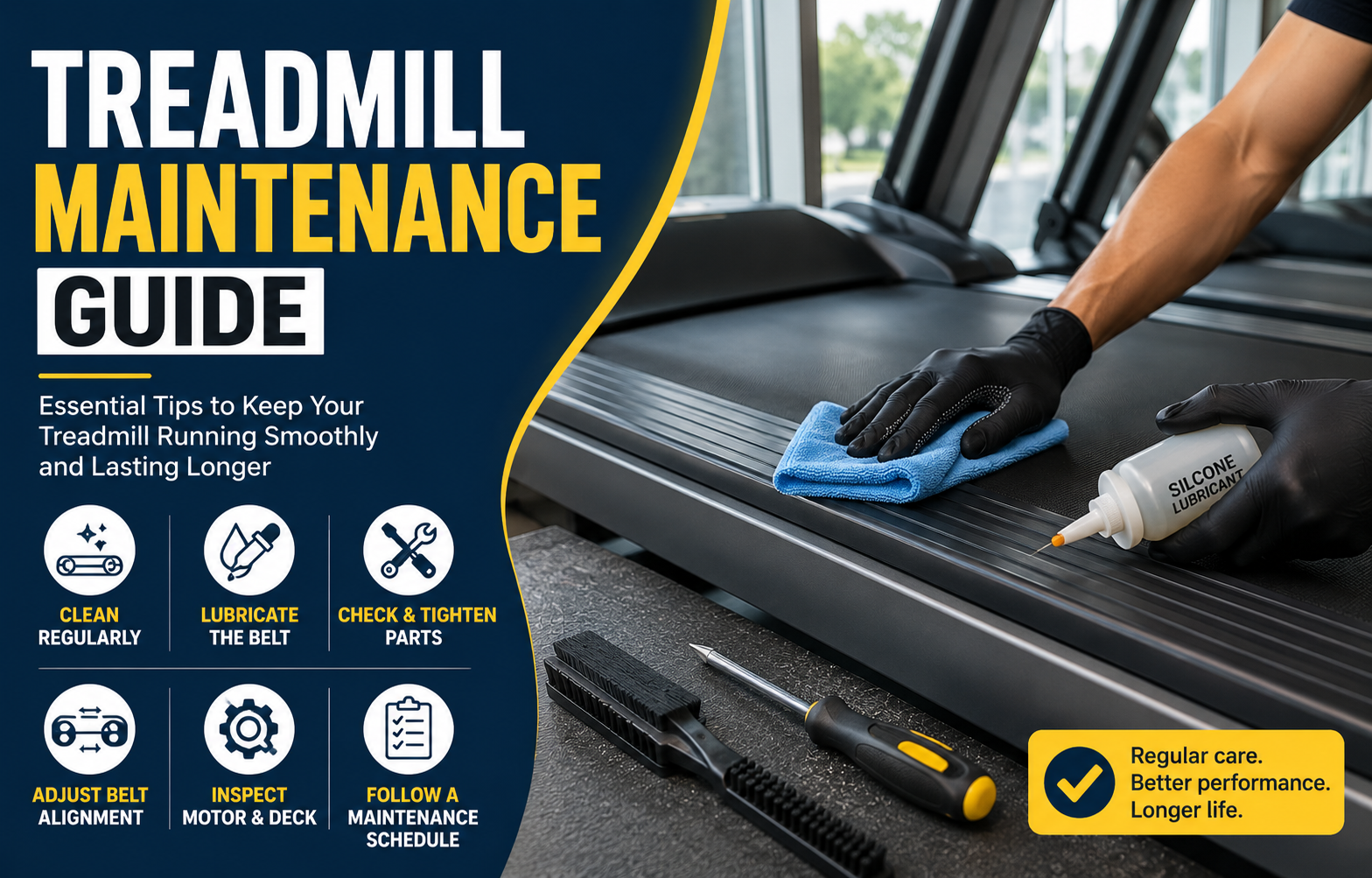
Treadmill Maintenance Guide: Daily, Weekly & Monthly Tips
How to Keep Your Treadmill Running Like New
A treadmill is one of the biggest investments you can make in your Gym fitness setup. But just like a car, it needs regular care to perform well and last for years.
Without proper maintenance, even the best treadmill can develop belt issues, motor strain, or annoying noises that affect your workouts.
This treadmill maintenance guide walks you through everything you need to know from daily habits to monthly checks so your machine stays safe, smooth, and
efficient for the long run.
Why Treadmill Maintenance Matters
Skipping maintenance doesn't just shorten your treadmill's lifespan. It can also lead to:
- Uneven belt movement that affects your stride
- Increased motor strain, leading to costly repairs
- Annoying squeaks, friction, or burning smells
- Safety risks like belt slipping during a run
A few minutes of care each week can save you hundreds of dollars in repairs and keep your workouts safe and consistent.
Daily Treadmill Maintenance Tips
These quick habits take less than five minutes but make a big difference over time.
1. Wipe Down After Every Use
Sweat contains salt and moisture, which can corrode metal parts and damage the console over time. After every session:
- Wipe the console, handlebars, and side rails with a dry or slightly damp cloth.
- Avoid spraying cleaner directly on the screen or buttons.
2. Check the Power Cord and Plug
Before switching it off, glance at the power cord for any fraying, bends, or loose connections. A damaged cord is a fire hazard and should be replaced immediately.
3. Keep the Area Clean
Dust and pet hair can settle into the motor compartment, especially if your treadmill is in a carpeted room. A quick sweep around the base keeps debris from being
pulled inside.
Weekly Treadmill Maintenance Checklist
1. Clean Underneath the Belt
Lift the front edge of the belt slightly and check for dust, lint, or hair buildup near the motor area. Use a vacuum with a narrow nozzle attachment to clean this space
weekly.
2. Inspect the Belt Alignment
Walk slowly on the treadmill at a low speed and watch the belt. It should run straight down the center. If it drifts to one side, it needs adjusting (more on this below).
3. Listen for Unusual Sounds
Grinding, squeaking, or clicking noises usually indicate friction, loose bolts, or a part needing lubrication. Catching this early prevents bigger motor problems later.
Monthly Treadmill Maintenance Tasks
1. Lubricate the Belt
This is the single most important treadmill maintenance task. The belt and deck need silicone-based lubricant to reduce friction between them.
How to lubricate your treadmill belt:
- Unplug the treadmill before starting.
- Lift the edges of the belt on both sides.
- Apply a small amount of 100% silicone lubricant evenly along the deck, not on top of the belt.
- Turn the treadmill on at a low speed for 1–2 minutes to spread the lubricant evenly.
Check your owner's manual, since some treadmills (especially ones with pre-lubricated decks) don't require this step as often.
2. Check and Adjust Belt Tension
A loose belt can slip, while a belt that's too tight strains the motor.
How to check belt tension:
- Lift the belt's edge at the midpoint between the rollers.
- If it lifts more than 2–3 inches, it's too loose.
- If it barely lifts, it's too tight.
Most treadmills have tension bolts at the rear rollers that can be adjusted with an Allen wrench — usually a quarter turn at a time on each side.
3. Tighten Loose Bolts and Screws
Vibration from regular use can loosen screws over time. Once a month, check:
- Handlebars
- Console mounts
- Side rail screws
- Frame bolts
A simple tightening session prevents wobbling and rattling during workouts.
4. Clean the Motor Area Thoroughly
Open the motor hood (refer to your manual for the exact process) and use a soft brush or vacuum to clear dust buildup. A dusty motor compartment can overheat and
reduce the machine's lifespan.
Quarterly Treadmill Maintenance
1. Inspect the Belt for Wear and Tear
Look closely at the running belt for:
- Fraying edges
- Cracks or thinning patches
- Uneven thickness
If the belt looks worn out, consider replacing it before it tears completely during use.
2. Check Deck Condition
The deck (the board beneath the belt) can wear down over time. Flip it if your model allows (many decks are reversible) to extend its usable life.
3. Inspect Rollers
Spin the front and rear rollers by hand (with the treadmill unplugged) to check for smooth rotation. Stiff or noisy rollers may need lubrication or replacement.
Common Treadmill Problems and Quick Fixes
| problem | Likely Cause | Quick Fix |
| Belt slipping | Loose belt tension | Tighten rear roller bolts evenly |
| Belt drifting to one side | Misalignment | Adjust tension bolt on the opposite side |
| Burning smell | Motor overheating or friction | Clean motor area, check lubrication |
| Squeaking noise | Dry belt/deck | Apply silicone lubricant |
| Console not responding | Loose wiring or sensor issue | Check console connections, consult manual |
Final Thoughts
Treadmill maintenance doesn't have to be complicated or time-consuming. By building small habits into your routine — wiping it down daily, lubricating monthly, and
Inspecting quarterly — you can avoid expensive repairs and enjoy smooth, safe workouts for years.
A well-maintained treadmill isn't just about saving money. It's about protecting your fitness routine and making sure your equipment is always ready when you are.