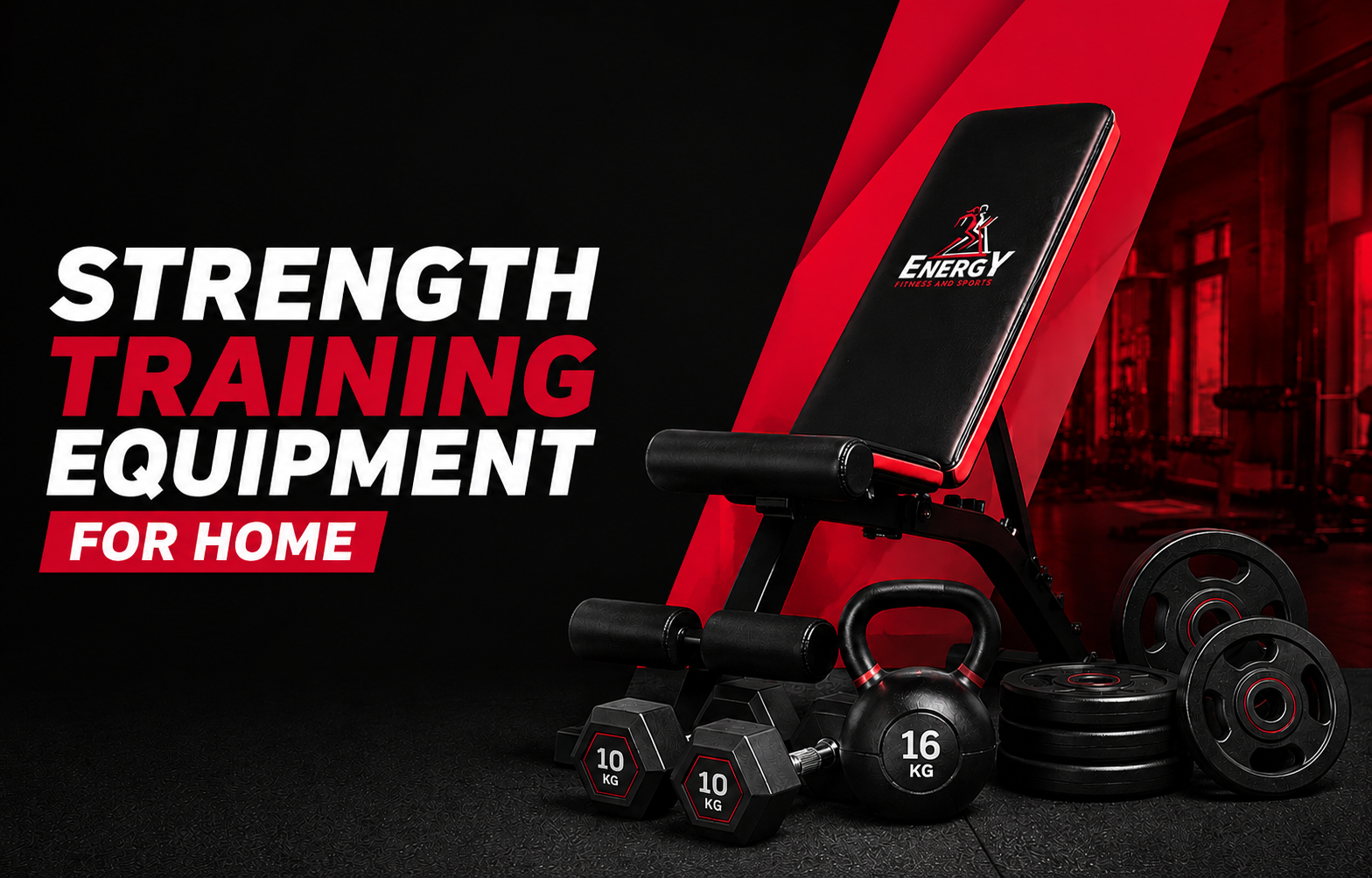
strength training equipment for home
Setting up a home gym for strength training sounds expensive and complicated. But it doesn't have to be. Whether you have a spare room, a garage, or just a corner of your bedroom you can build a solid setup that gets you real results. This guide covers the essential equipment, what each piece does, and how to choose based on your budget and goals.
Why train at home?
No commute, no waiting for equipment, no membership fees. Once you have the basics, your home gym pays for itself within a few months. More importantly, you're more likely to stay consistent when the gym is 10 steps away.
But here's the thing: you don't need everything at once. Start with what matters for your goals and build from there.
The essential equipments
These are the pieces that give you the most training value for the money. Most serious home gym setups are built around these.
Barbell + weight plates
The single most versatile piece of equipment. Squats, deadlifts, bench press, rows all done with one bar.
Power rack / squat stand
Lets you squat and bench press safely without a spotter. A power rack also doubles as a pull-up station.
Adjustable dumbbells
Replace a full rack of dumbbells. Great for isolation work and accessory exercises. Save a lot of space.
Resistance bands
Cheap, space-saving, and surprisingly effective. Good for warm-ups, mobility work, and assisted pull-ups.
Flat/adjustable bench
You need a bench for pressing movements. Adjustable is better gives you incline and decline options.
Rubber floor mats
Protect your floor, reduce noise, and keep equipment from sliding. Not optional if you're lifting heavy.
What you can skip
1. Cable machines are useful, but expensive and large. Bands and free weights can replace most cable exercises.
2. Leg press machines, squats and lunges work your legs just as well, often better.
3. The Smith machine limits your range of motion and teaches bad movement patterns for beginners.
4. Cardio equipment unless cardio is your main focus, a jump rope or outdoor walks cover it cheaply.
Things to consider before buying
Space: Measure your space before buying a rack. A standard power rack needs roughly 8x8 ft and 7+ ft ceiling height.
Flooring: Always lay rubber mats first. Dropping weights on concrete or tile causes real damage.
Weight capacity: Check the rack and bench weight limits. Don't buy cheap gear you'll outgrow in 3 months.
Adjustabality: Adjustable dumbbells and a multi-angle bench give you more training options in less space.
Conclusion
You don't need a fully loaded gym to get strong at home. A barbell, a rack, a bench, and some plates that's really all it takes to run a serious strength program for years.
Start small if you have to. Even a pair of adjustable dumbbells and a resistance band will get you moving in the right direction. Add equipment as your training progresses and your budget allows.
The goal isn't a perfect setup. The goal is to train consistently. And the easiest way to do that is to have equipment ready and waiting no drive, no wait, no excuses.
Build your space around how you actually train, not around what looks good on Instagram. Keep it simple, keep it functional, and you'll get more out of a basic home gym than most people get from a commercial one.