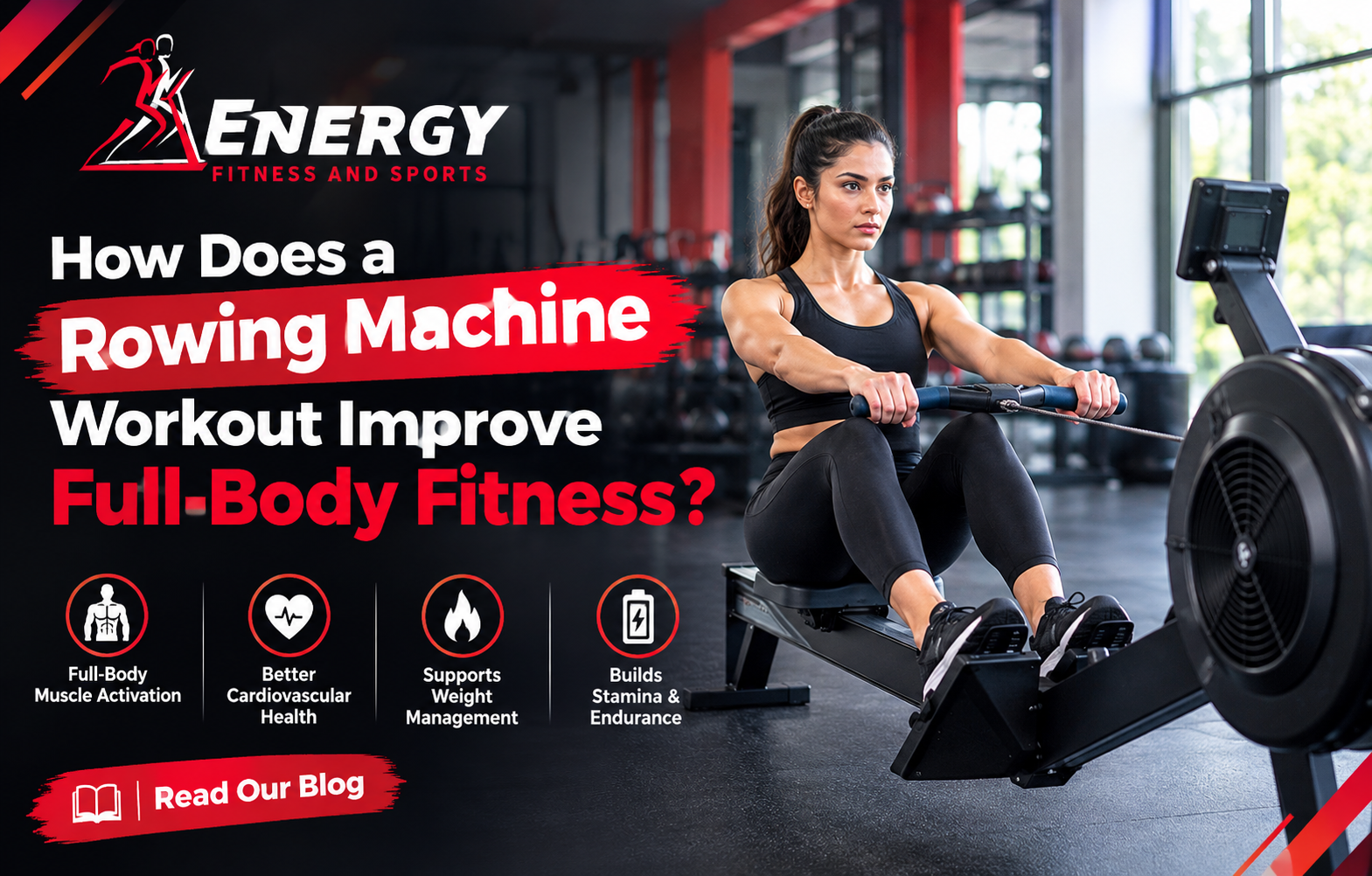
How Does a Rowing Machine Workout Improve Full-Body Fitness?
Staying fit and maintaining a healthy lifestyle requires regular physical activity. However, choosing the right fitness equipment can make a big difference in achieving your fitness goals. Among the many fitness machines available today, the rowing machine has become a popular choice for people who want to improve their overall fitness.
A rowing machine provides an effective workout that combines cardiovascular exercise with muscle strengthening. Unlike some gym machines that focus on specific muscle groups, a rowing machine engages several parts of the body at the same time. Whether you are a beginner, a fitness enthusiast, or someone looking to improve workout performance, rowing exercises can be a valuable addition to your fitness routine.
In this blog, let's explore how a rowing machine workout improves full-body fitness, its major benefits, and how to use it effectively.
What Is a Rowing Machine?
A rowing machine is a fitness machine designed to simulate the movement of rowing a boat. It allows users to perform a complete rowing motion while remaining in one place. The machine generally includes a seat, footrests, handle, resistance system, and digital monitor.
When using a rowing machine, you push through your legs, move your upper body, and pull the handle towards your chest. This coordinated movement activates multiple muscle groups and helps improve physical endurance.
Rowing machines are commonly used in commercial gyms, fitness centres, and home workout spaces because they offer an effective exercise option for different fitness levels.
7 Major Benefits of Rowing Machine Workouts
1. Provides a Full-Body Workout
One of the biggest advantages of a rowing machine is that it works multiple muscle groups during a single exercise. The rowing movement involves the legs, back, shoulders, arms, and core muscles.
Your legs provide the initial power, your core helps maintain stability, and your arms and back complete the pulling movement. This combination makes rowing a practical exercise for people who want to train their entire body using one machine.
2. Improves Cardiovascular Fitness
Regular rowing exercises can help improve heart and lung endurance. Since rowing involves continuous movement, it increases your heart rate and challenges your cardiovascular system.
Including rowing sessions in your weekly workout routine can support better stamina and overall cardiovascular fitness. You can adjust your workout intensity depending on your current fitness level.
3. Supports Weight Management
Rowing is a calorie-burning cardiovascular exercise that can support weight management when combined with a balanced diet and consistent physical activity.
The number of calories burned depends on several factors, including workout intensity, duration, body weight, and fitness level.
For better results, combine rowing workouts with strength training and healthy eating habits rather than depending on a single exercise.
4. Strengthens Multiple Muscle Groups
A rowing machine engages different muscles throughout the exercise.
-
Legs: The quadriceps, hamstrings, and glutes contribute to the pushing movement.
-
Back: The upper and middle back muscles help complete the pulling action.
-
Arms: The biceps and forearms assist in pulling the handle.
-
Shoulders: The shoulder muscles support controlled upper-body movement.
-
Core: The abdominal and lower back muscles help maintain posture and stability.
Regular practice can help improve muscular endurance and overall body strength.
5. Offers a Low-Impact Exercise Option
Unlike high-impact activities such as running and jumping, rowing is generally a low-impact exercise because your feet remain supported on the footrests throughout the movement.
This makes it a useful option for people looking for cardiovascular exercise with less repetitive impact on their joints.
However, maintaining proper technique is important. People with existing injuries or medical conditions should consult a healthcare professional before starting a new exercise programme.
6. Improves Stamina and Endurance
Consistency is important when it comes to improving physical endurance. Rowing exercises challenge both your cardiovascular system and working muscles.
As you continue practising, you can gradually increase your workout duration or resistance according to your ability. This helps build stamina and makes it easier to handle longer workout sessions.
7. Suitable for Different Fitness Levels
Another advantage of rowing machines is that they can be used by beginners as well as experienced fitness enthusiasts.
Beginners can start with shorter sessions at a comfortable pace, while experienced users can try interval training and higher-intensity workouts.
The resistance and workout intensity can be adjusted depending on the machine's features and individual fitness goals.
How to Use a Rowing Machine Correctly
Using the correct rowing technique is essential for getting better workout results and reducing the risk of injury.
Follow these simple steps:
Step 1: Adjust Your Position
Sit comfortably on the rowing machine and place your feet securely on the footrests. Adjust the foot straps so that your feet remain stable.
Step 2: Hold the Handle Properly
Hold the handle with both hands using a relaxed grip. Keep your arms extended and shoulders relaxed.
Step 3: Start with the Leg Drive
Push through your feet and extend your legs. This is the first and most powerful part of the rowing movement.
Step 4: Move Your Upper Body
Once your legs are extended, lean your upper body slightly backwards while keeping your core engaged.
Step 5: Pull the Handle
Pull the handle towards your lower chest while keeping your elbows close to your body.
Step 6: Return to the Starting Position
Extend your arms first, lean your upper body forward, and then bend your knees to return to the starting position.
Repeat the movement smoothly without rushing.
Beginner-Friendly Rowing Machine Workout Plan
If you are new to rowing exercises, start with a simple workout routine and gradually increase the duration as your fitness improves.
| Workout Stage | Duration |
|---|---|
| Warm-up at a slow pace | 3 minutes |
| Comfortable rowing | 5 minutes |
| Moderate rowing | 3 minutes |
| Slow recovery rowing | 2 minutes |
| Cool-down | 2 minutes |
This 15-minute workout is a simple starting point for beginners. Adjust the intensity based on your comfort and fitness level.
Common Mistakes to Avoid While Using a Rowing Machine
Although rowing machines are easy to use, incorrect techniques can reduce workout effectiveness and cause unnecessary strain.
Here are some common mistakes to avoid:
1. Using Only Your Arms: Rowing is a full-body movement. Your legs should provide most of the initial power instead of relying only on your arms.
2. Rushing Through the Movement: Performing the exercise too quickly can affect your posture and technique. Maintain a controlled and consistent rhythm.
3. Slouching Your Back: Keep your spine in a neutral position and engage your core throughout the exercise.
4. Setting Resistance Too High: Beginners should avoid starting with excessive resistance. Focus on proper technique before increasing intensity.
5. Skipping Warm-Up: Always spend a few minutes warming up before starting an intense rowing session.
How to Choose the Right Rowing Machine for Your Gym or Home?
Choosing the right rowing machine depends on your available space, fitness requirements, and workout preferences.
Consider the following factors before purchasing:
-
Resistance Type: Check whether the machine uses air, magnetic, water, or other resistance systems.
-
Build Quality: Look for a strong frame and durable components that can support regular workouts.
-
Comfort: Choose a machine with a comfortable seat, suitable handle, and adjustable footrests.
-
Display Features: A digital monitor can help track workout duration, distance, stroke rate, and other available performance metrics.
-
Space Requirements: Check the machine dimensions and storage options before purchasing.
-
Usage Requirements: Consider whether the machine will be used for personal workouts or frequent commercial gym sessions.
Selecting equipment based on your fitness requirements can help you make a better long-term investment.
Why Add a Rowing Machine to Your Fitness Routine?
A rowing machine is a versatile fitness machine that combines cardiovascular exercise, muscular endurance, and coordinated body movement. It allows users to work different muscle groups without needing multiple machines for every exercise.
For commercial gyms, fitness studios, and home workout spaces, rowing machines can provide an additional workout option for members and fitness enthusiasts.
If you are planning to upgrade your gym equipment or create a well-equipped workout space, choosing quality fitness machines is an important step.
Conclusion
Rowing machine workouts offer an effective way to improve full-body fitness by combining cardiovascular training and muscular activity. From supporting weight management to improving stamina and strengthening different muscle groups, rowing can be a valuable addition to a regular exercise programme.
The key to achieving better results is to maintain proper technique, follow a consistent workout routine, and gradually increase exercise intensity.
Whether you are setting up a home gym or managing a professional fitness centre, investing in suitable rowing equipment can help create more workout opportunities.
Explore quality fitness equipment from Energy Fitness and take the next step towards building a better workout environment.