_(1).png)
Asthma-Friendly Home Gym Workouts for Better Lung Health
Living with asthma doesn’t mean you have to avoid physical activity. In fact, regular exercise can improve your lung capacity, reduce symptoms, and enhance your overall quality of life. However, asthma presents unique challenges that make traditional gym environments or outdoor workouts daunting. That’s where home gyms come in! With the right approach, you can build an asthma-friendly fitness routine tailored to your needs.
Understanding Asthma and Exercise
What is Asthma?
Asthma is a chronic respiratory condition characterized by inflammation and narrowing of the airways. Symptoms include shortness of breath, wheezing, coughing, and chest tightness. Triggers like allergens, cold air, and intense physical activity can exacerbate these symptoms.
How Exercise Affects Asthma
While exercise can trigger asthma symptoms for some (a condition known as Exercise-Induced Bronchoconstriction or EIB), staying active is essential for lung health. With the right precautions, asthma patients can safely enjoy the benefits of physical activity.

Source
Benefits of Home Workouts for Asthma Patients
Home workouts offer a controlled environment where you can manage triggers like dust, pollen, and extreme temperatures. You can adjust the intensity of your workouts, ensuring they align with your current health condition.
Preparing Your Home Gym for Asthma-Friendly Workouts
- Ensuring Proper Ventilation: Keep your workout area well-ventilated to reduce the risk of breathing in stale air. An air purifier can also help minimize indoor allergens.
- Using Hypoallergenic Equipment: Opt for equipment that is easy to clean, such as rubber mats and smooth surfaces, to reduce dust accumulation.
- Maintaining a Clean Space: Regularly dust and vacuum your workout area to prevent asthma flare-ups caused by allergens.
Best Workouts for Asthma-Friendly Home Gyms
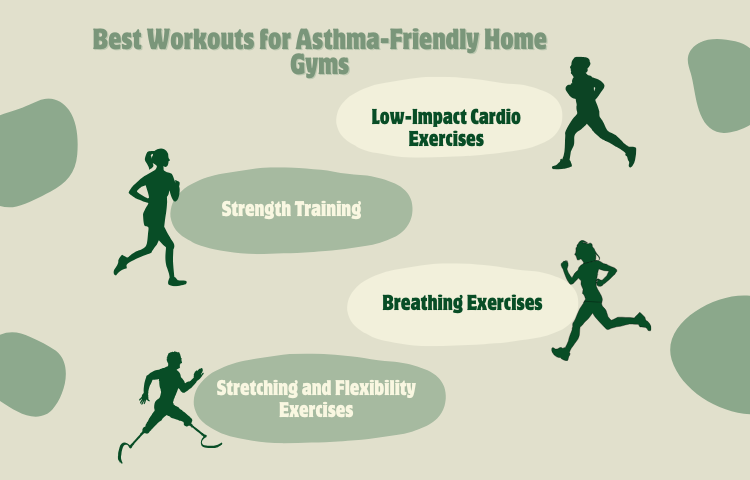
- Low-Impact Cardio Exercises: Walking on a treadmill, using a stationary bike, or working out on an elliptical are excellent choices. These exercises improve cardiovascular health without overtaxing your lungs.
- Strength Training: Focus on low-weight, high-repetition routines. Strength training helps build muscle and improve stamina, making daily activities easier.
- Breathing Exercises: Yoga and Pilates combine gentle movements with deep breathing, promoting relaxation and lung efficiency.
- Stretching and Flexibility Exercises: Incorporate dynamic and static stretching to improve flexibility and reduce muscle tension.
Step-by-Step Workout Plan for Beginners
- Warm-Up: Start with 5–10 minutes of light movements like walking or stretching.
- Main Workout: Alternate between cardio and strength exercises for 20–30 minutes.
- Cool-Down: End with deep breathing and gentle stretches to prevent post-exercise asthma symptoms.
Tips for Managing Asthma During Workouts
- Always warm up and cool down.
- Keep a rescue inhaler within reach.
- Stop immediately if you experience shortness of breath or wheezing.
Foods and Supplements to Support Lung Health
Incorporate anti-inflammatory foods like turmeric, ginger, and fatty fish into your diet. Vitamin D and omega-3 supplements are also beneficial.
Common Mistakes to Avoid
- Skipping warm-ups or cool-downs.
- Pushing too hard, too fast.
- Exercising in dusty or poorly ventilated spaces.
Tracking Progress and Setting Goals
Track your lung capacity improvements and gradually increase workout intensity. Celebrate milestones to stay motivated.
Staying Motivated and Consistent
Mix up your routine with new exercises and set achievable goals. Remember, consistency beats intensity when it comes to long-term fitness.
Building an asthma-friendly home workout routine can significantly improve your lung health and overall fitness. Start slow, listen to your body, and enjoy the journey toward better health!
FAQs
1. Can asthma patients do high-intensity workouts?
Yes, but they should be approached with caution. Gradual progress and monitoring are key.
2. What is the best time for asthma patients to exercise?
Mid-morning or early evening, when air quality is generally better and your body is warmed up.
3. How can I prevent asthma attacks during exercise?
Warm up properly, avoid triggers, and keep medication nearby.
4. Are there any specific breathing techniques for asthma patients?
Yes, pursed-lip breathing and diaphragmatic breathing can help manage symptoms.
5. Can regular exercise improve asthma over time?
Absolutely! Consistent exercise can strengthen your lungs and reduce asthma symptoms.